The Real Cost of Manual Attendance Tracking
A paper sign-in sheet tells you one thing: someone wrote their name at some point during the day. It does not tell you when they actually arrived, how long they stayed, whether they took an unauthorised break, or whether the signature was theirs at all. For a business with five or more staff members, this is not a minor inconvenience — it is a daily leak.
The cost shows up in payroll. Staff paid for hours they did not work. Overtime disputes with no data to resolve them. Lateness that goes unaddressed because there is no consistent record. And at the end of every pay cycle, someone manually counting days and transferring numbers into a spreadsheet — which is exactly where errors enter.
What Attendance Management Software Nigeria Businesses Actually Need
Good attendance software for a Nigerian business needs to solve specific operational problems, not just replace paper with a digital equivalent.
Clock-in accuracy. The system needs to verify that the person clocking in is actually the person assigned to the shift. Facial recognition is the most reliable method — it cannot be delegated to a colleague the way a PIN or a card can.
Lateness and absence tracking. Every clock-in should be timestamped and compared against the scheduled shift start. Late arrivals should be flagged automatically, not noticed by a manager who happened to be watching.
Multi-branch support. A business with more than one location needs consolidated attendance data across all branches in one view — not separate sheets collected from each site at the end of the week.
Leave management. Annual leave, sick leave, and public holidays need to be accounted for in the attendance record, not maintained separately in a different document.
Direct payroll integration. If attendance data has to be manually transferred into payroll at the end of the month, the process has not been simplified — it has just moved the work from the front end to the back end. The two systems must be connected.
How Opsuite Attendance Works
Opsuite Attendance uses facial recognition for clock-in and clock-out. Staff members scan their face at the kiosk device — the system matches it against their profile and logs the timestamp. No PIN sharing, no buddy punching, no manual entry.
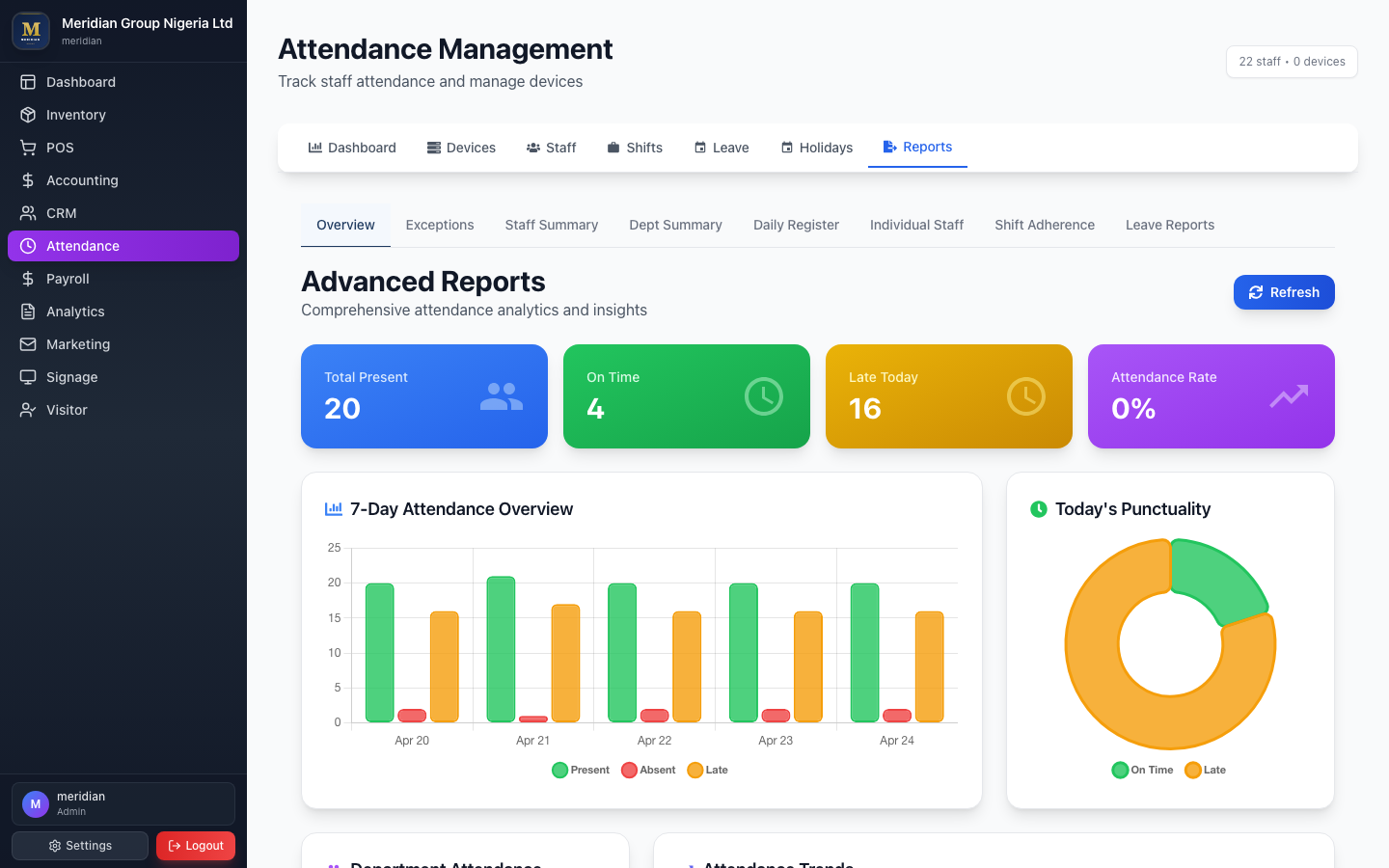
Every clock-in is logged with the staff member's name, photo, time, and branch. Lateness is flagged automatically against the assigned shift. The manager sees a live dashboard — who is in, who is late, who has not arrived — without calling anyone or checking a sheet.
Shift management is built in. Assign shifts by staff member or by role, bulk-assign for busy periods, and set different schedules for different branches. Leave requests and approvals are managed from the same dashboard.
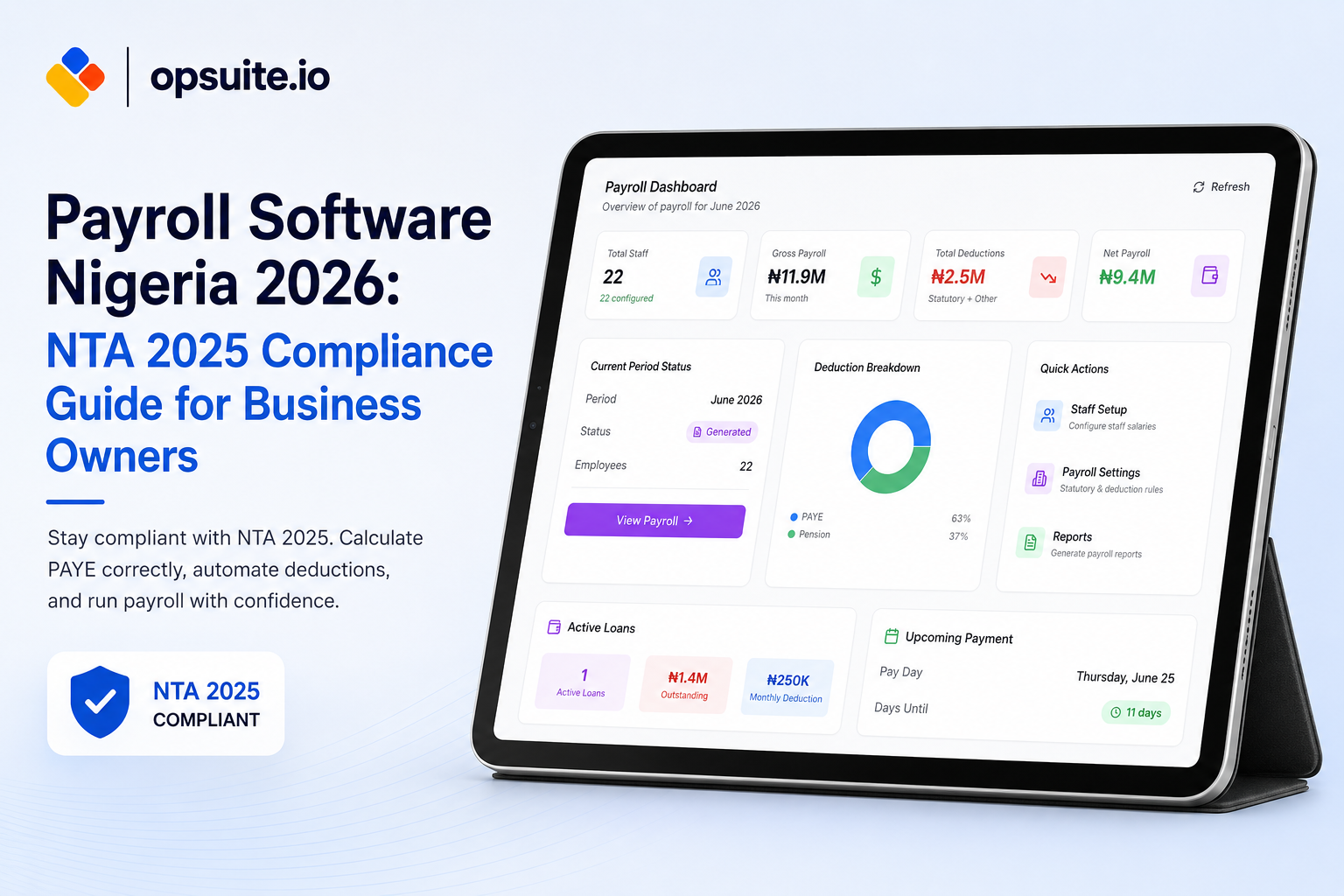
When payroll runs, Opsuite pulls the attendance data directly. Days worked, late days, absent days, leave taken — all applied automatically. No manual transfer. No reconciliation.
The Difference Attendance Software Makes
A gym owner who ran Opsuite on a pilot reported that staff accountability improved within the first two weeks — not because of any policy change, but because staff knew that clock-in was now recorded with a photo and a timestamp. The behaviour change came from the visibility.
Payroll accuracy improved because hours worked were no longer estimated. The owner stopped spending the first three days of every month reconciling attendance records and could run payroll in under ten minutes.
Getting Started
Opsuite Attendance is available on all plans. Start your free 7-day trial at opsuite.io/pricing or sign up at app.opsuite.io. No credit card required.