What Nigerian Small Businesses Actually Need From Business Software
Most business management software sold globally was not built with Nigerian businesses in mind. The tax calculations assume HMRC or IRS rules. The payment methods do not include bank transfer. The currency defaults to dollars or pounds. And the hardware requirements assume a budget that most Nigerian SMEs do not have.
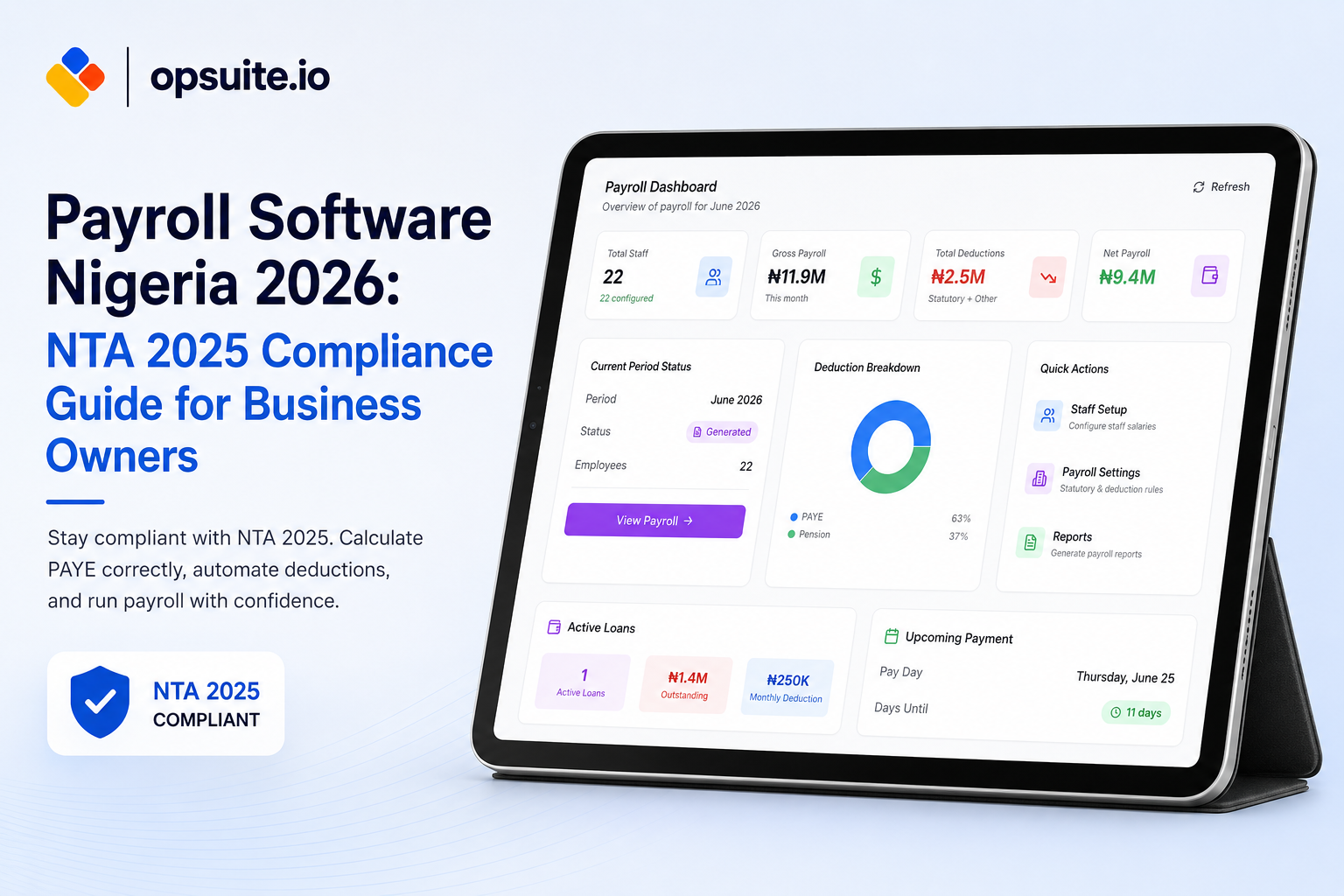
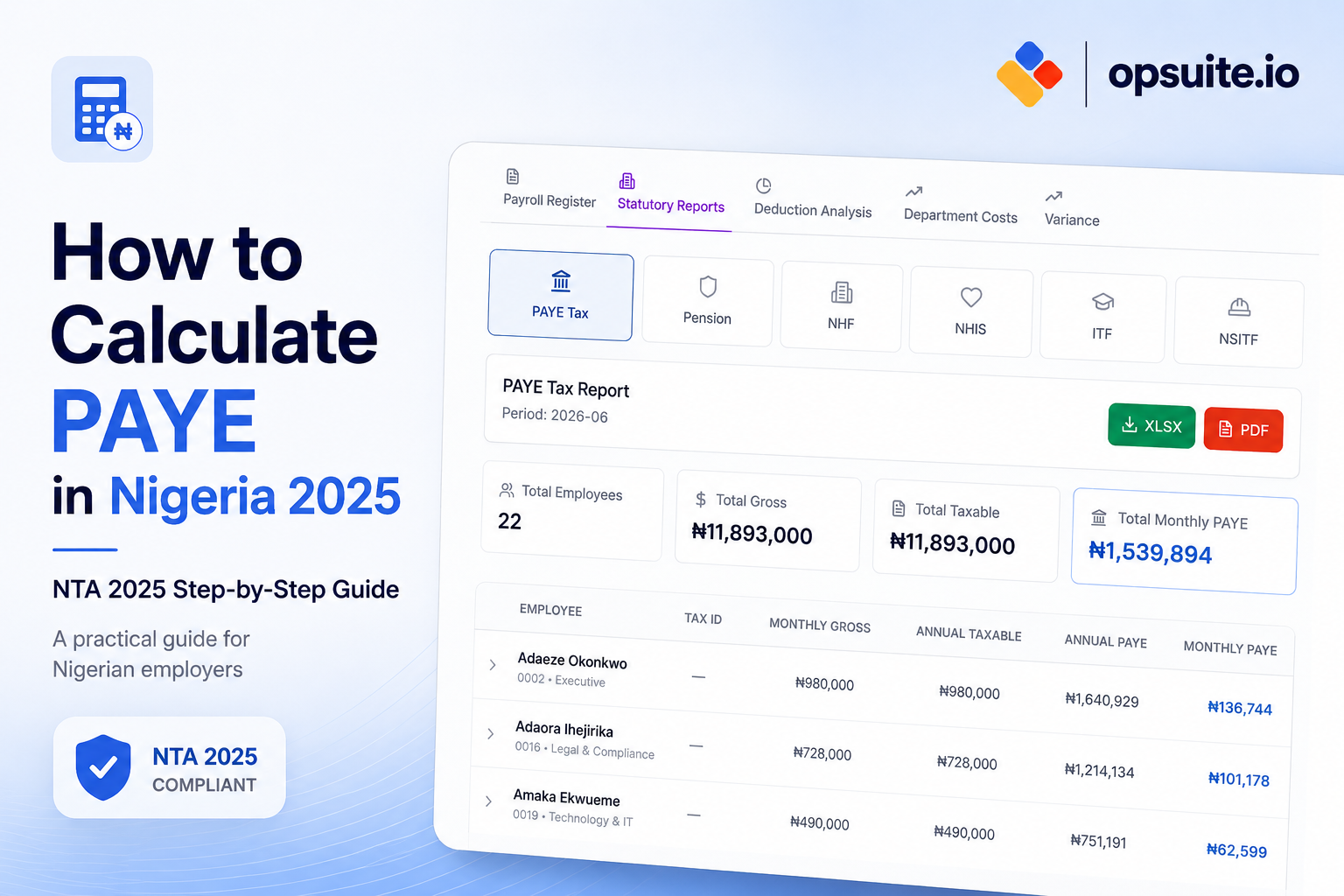
A Nigerian business owner needs software that handles PAYE under the Nigeria Tax Act 2025, accepts cash, card, and bank transfer at the POS, runs on a tablet or phone they already own, and does not require an IT team to set up. Those requirements narrow the field significantly.
What to Look For: The 5-Point Checklist
1. Nigerian tax compliance. Does it calculate PAYE using NTA 2025 brackets? Does it handle VAT at 7.5%? Does it track FIRS filing deadlines? If the vendor cannot answer these questions directly, the software was not built for Nigeria.
2. Local payment methods. Cash, card, and bank transfer must all be supported at the point of sale. Split payments are common in Nigerian retail. Any POS that does not handle this creates friction at the counter.
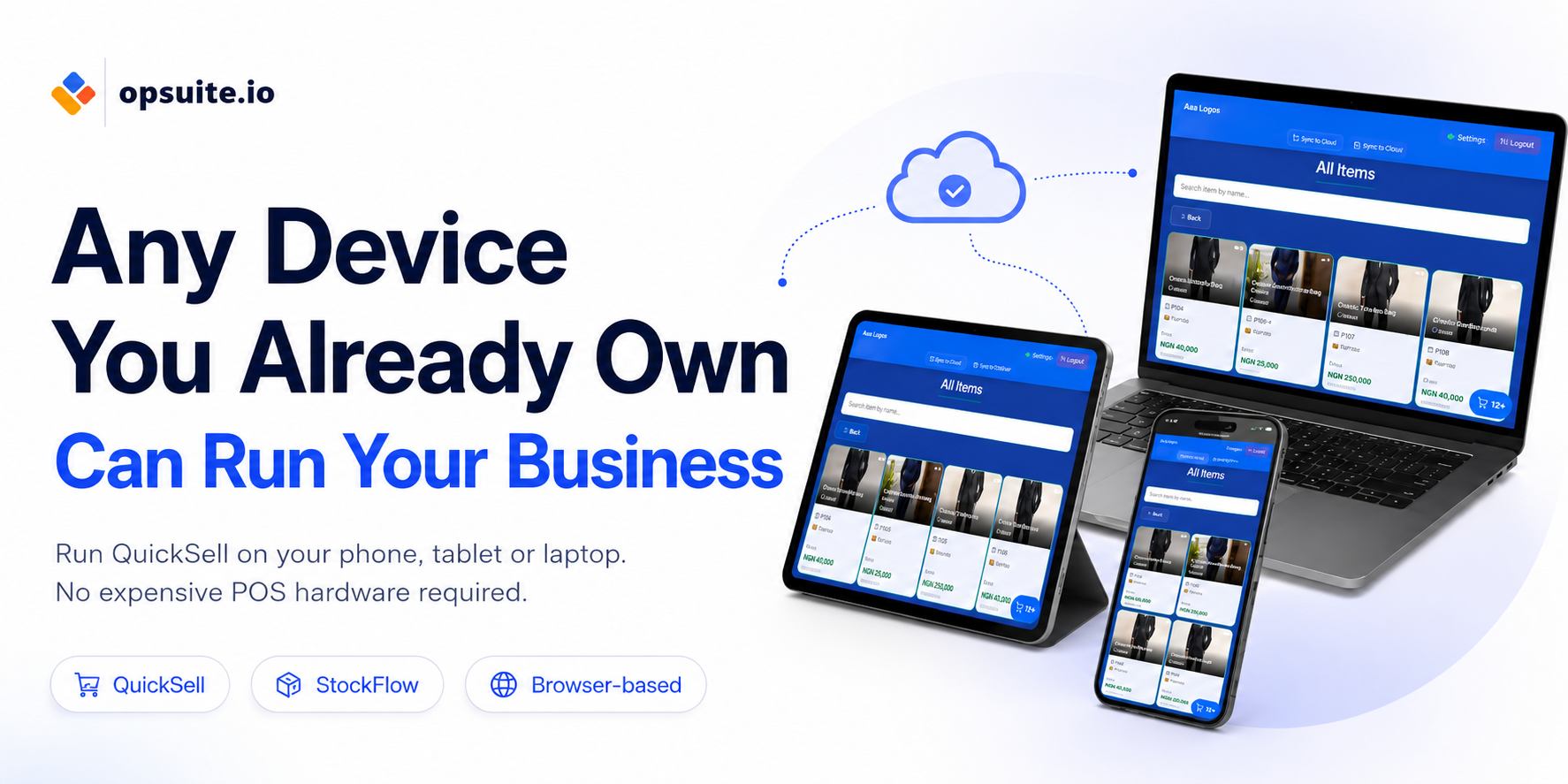
3. Works on existing devices. Buying dedicated POS hardware adds cost before you have seen a return. Good business software for Nigeria should run on the tablet, phone, or laptop you already own. No hardware purchase required.
4. All modules connected. If your inventory does not talk to your POS, and your POS does not talk to your accounting, you are doing manual reconciliation every week. Integrated software eliminates this entirely.
5. Priced for SMEs. Enterprise ERP pricing is not appropriate for a business with 5-20 staff. Look for tiered pricing that scales as the business grows.
The Core Modules Every Nigerian SME Needs
A complete business management platform for a Nigerian SME should cover at minimum: inventory management, point of sale, accounting, payroll, and CRM. These five modules cover the core operational and financial needs of most small businesses.
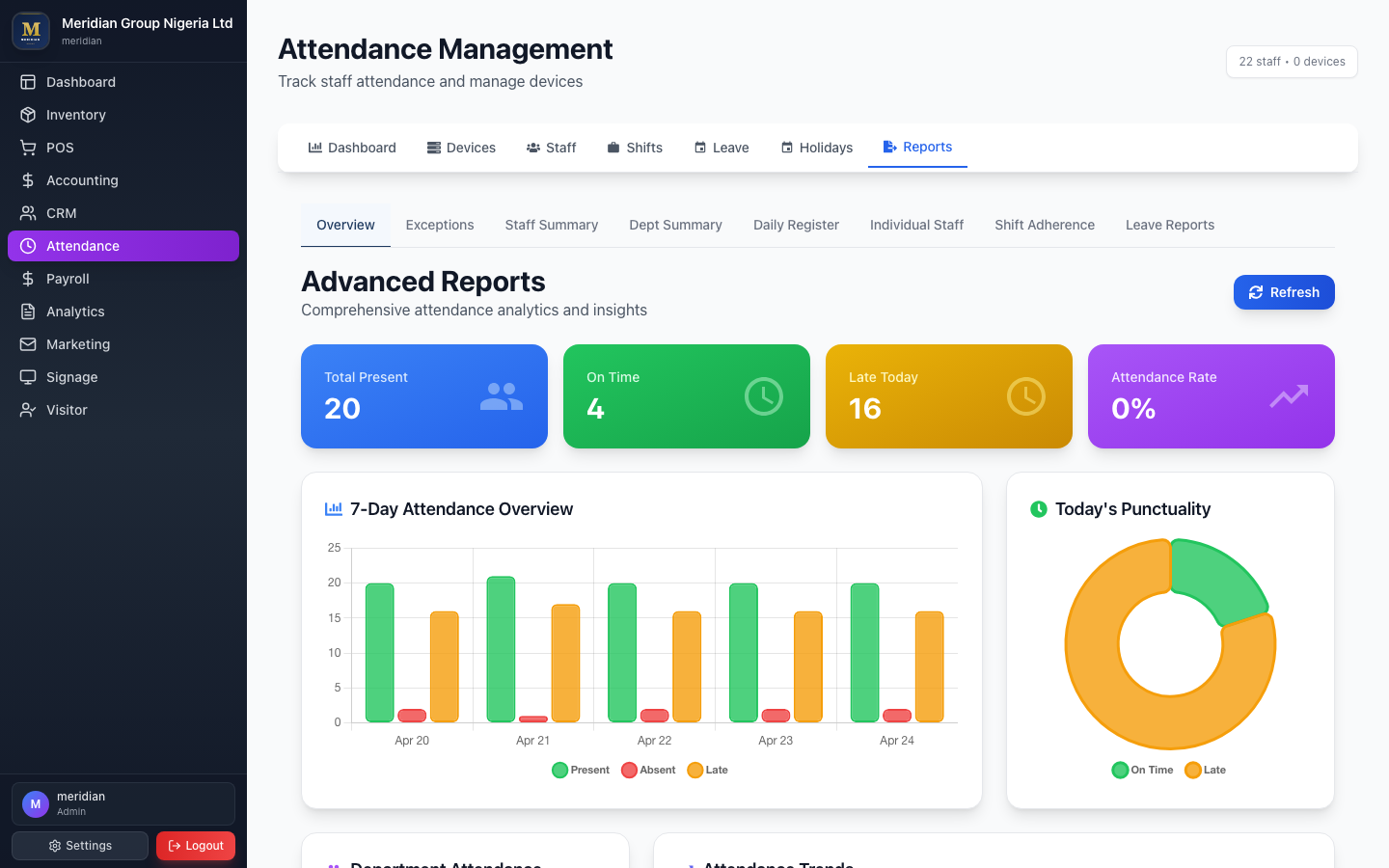
Attendance management is essential the moment you have more than three staff members. Without it, lateness and hours worked are tracked manually, and payroll accuracy suffers. Analytics gives you the cross-module picture so you can make decisions based on data, not gut feel.
How Opsuite Compares
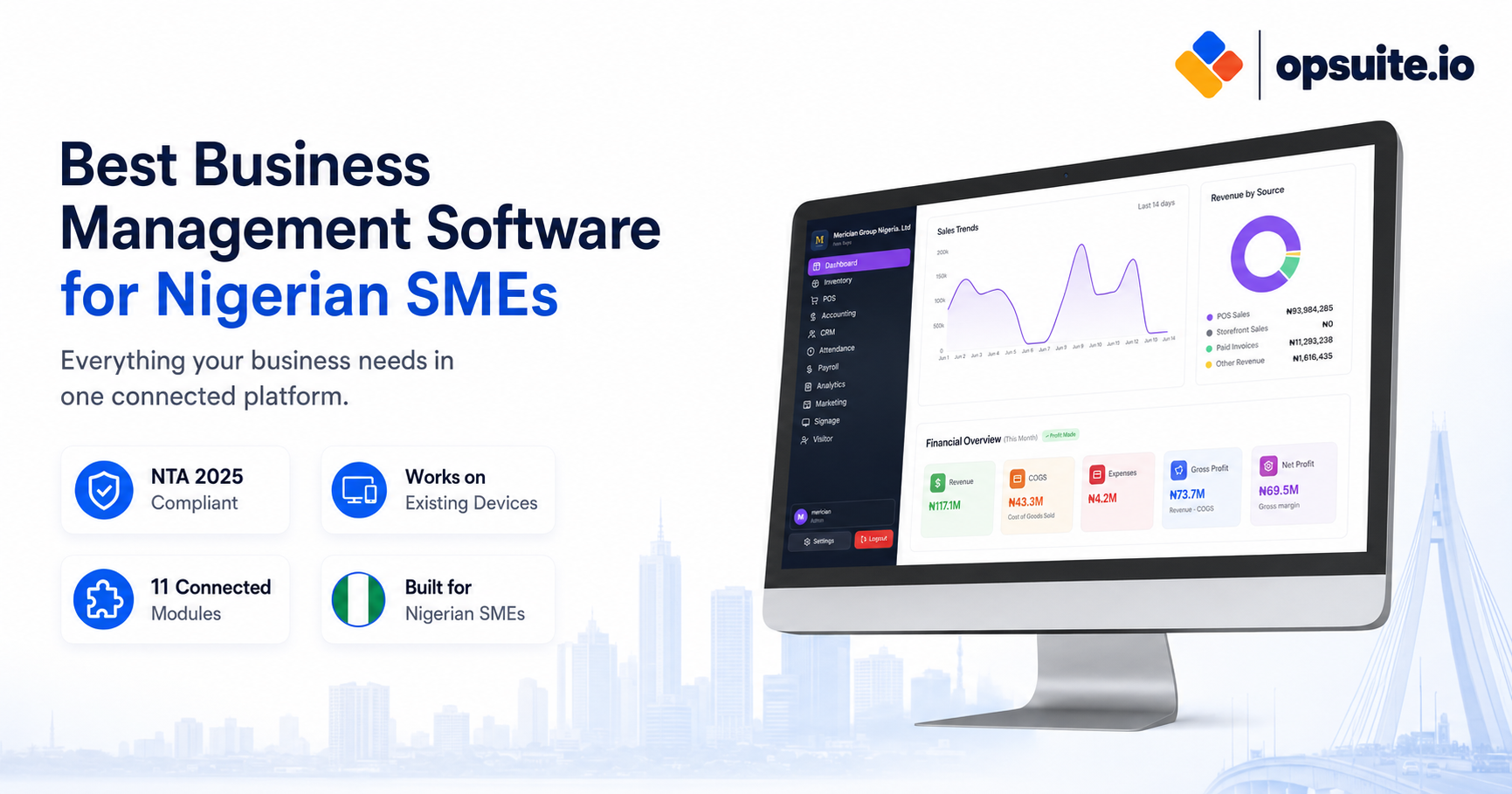
Opsuite is the only all-in-one business management platform built specifically for Nigerian SMEs and compliant with the Nigeria Tax Act 2025 from launch. It covers eleven modules: POS (QuickSell), Inventory, Accounting, Payroll, CRM, Attendance, Analytics, Storefront, Marketing, Digital Signage, and Visitor Management.
Every module is connected. A sale at QuickSell reduces inventory, updates the customer's CRM profile, logs in accounting, and attributes to the staff member — automatically, no manual entry. Attendance feeds directly into payroll. Inventory movements flow into the P&L.
It runs on any device you already own. It handles cash, card, bank transfer, and split payments. Payroll calculates PAYE using the correct NTA 2025 brackets. And it starts at pricing designed for growing businesses, not enterprises.
Getting Started
Opsuite offers a free 7-day trial with all modules unlocked — no credit card required. Most businesses are fully set up within the same day.
Start your free trial at opsuite.io. For a walkthrough, contact onboarding@opsuite.io.