The Hidden Cost of Disconnected Tools
Walk into most Nigerian SMEs today and you will find a familiar scene: inventory tracked in Excel spreadsheets, a standalone POS terminal that does not talk to anything else, attendance recorded on paper sign-in sheets, and accounting done in yet another piece of software. Each tool works on its own, but together they create a tangled web of manual data entry, duplicate records, and costly errors.
This patchwork approach might feel manageable when you have a single shop and a handful of staff. But as your business grows, the cracks widen. A sale happens at the POS, but stock levels in the spreadsheet are not updated until someone remembers to do it. An employee clocks in late, but payroll still processes their full hours because no one cross-referenced the sign-in sheet. A customer asks about a previous purchase and staff scramble through receipts to find the record.
The Data Silo Problem
When each department operates its own system, information gets trapped in silos. Your sales data lives in the POS, your stock data lives in Excel, your financial data lives in accounting software, and your HR data lives on paper. Bringing all of this together for a single decision, like whether to restock a product, requires pulling data from multiple places, reconciling differences, and hoping nothing was missed.
Data silos also mean delayed insights. By the time you compile a weekly sales report from the POS, cross-check stock levels in the spreadsheet, and compare expenses in the accounting software, the information is already stale. In a fast-moving market, stale data leads to missed opportunities and preventable losses.
Common Pain Points SMEs Face
- Double data entry across POS, inventory spreadsheets, and accounting software
- Stock discrepancies because sales are not reflected in inventory in real time
- Payroll errors from manually transferring attendance data
- No unified view of customer purchase history across channels
- Hours spent generating reports that should take minutes
- Difficulty managing multiple branches with separate systems
How an Integrated Platform Solves This
One Sale — Everything Updates Automatically
No manual entry. No delays. No errors.
An all-in-one business management system like Opsuite eliminates silos by connecting every part of your operation on a single platform. When a sale is made at the POS, inventory is automatically reduced, the transaction is logged in accounting, and the customer's purchase history is updated in the CRM. No manual entry, no reconciliation, no gaps.
Inventory Syncs to POS and Accounting Automatically
With Opsuite, every item sold through the POS immediately reduces your stock count. Low-stock alerts trigger automatically so you never run out of your best sellers. At the same time, the revenue from that sale flows directly into your accounting module, categorised and tax-ready. No more end-of-day reconciliation headaches.
Attendance Feeds Directly into Payroll
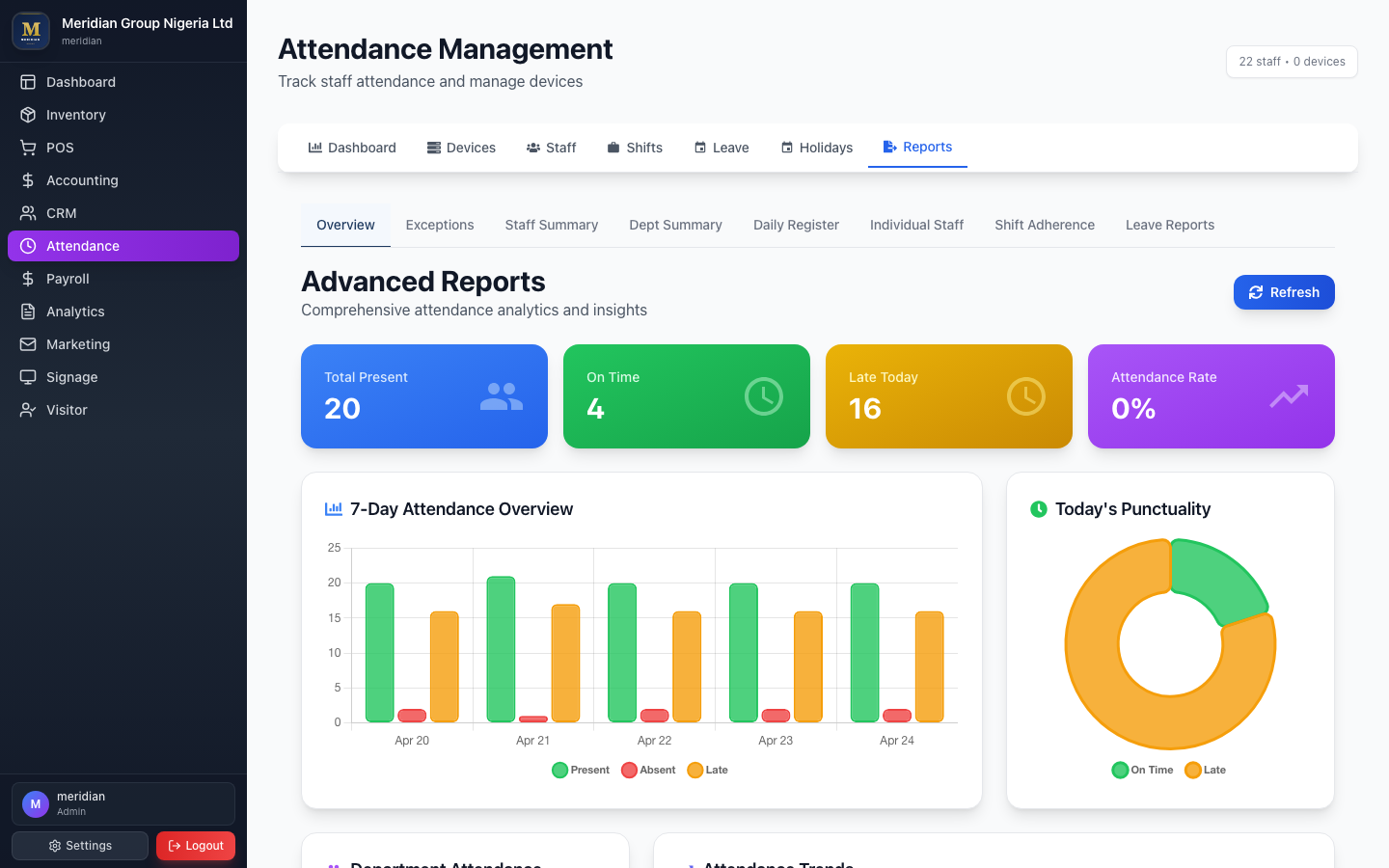
Opsuite's facial recognition attendance system records clock-in and clock-out times with biometric accuracy. These records feed directly into the payroll module, calculating hours worked, overtime, and deductions automatically. Buddy punching becomes impossible, and payroll processing that used to take days now takes minutes.
CRM Tracks Purchase History from POS
Every transaction at the POS is linked to a customer profile in the CRM. You can see what a customer bought, when they bought it, how much they spent, and how often they visit. This data powers targeted promotions, loyalty programmes, and personalised service that keeps customers coming back.
Real-Time Dashboard Across All Modules
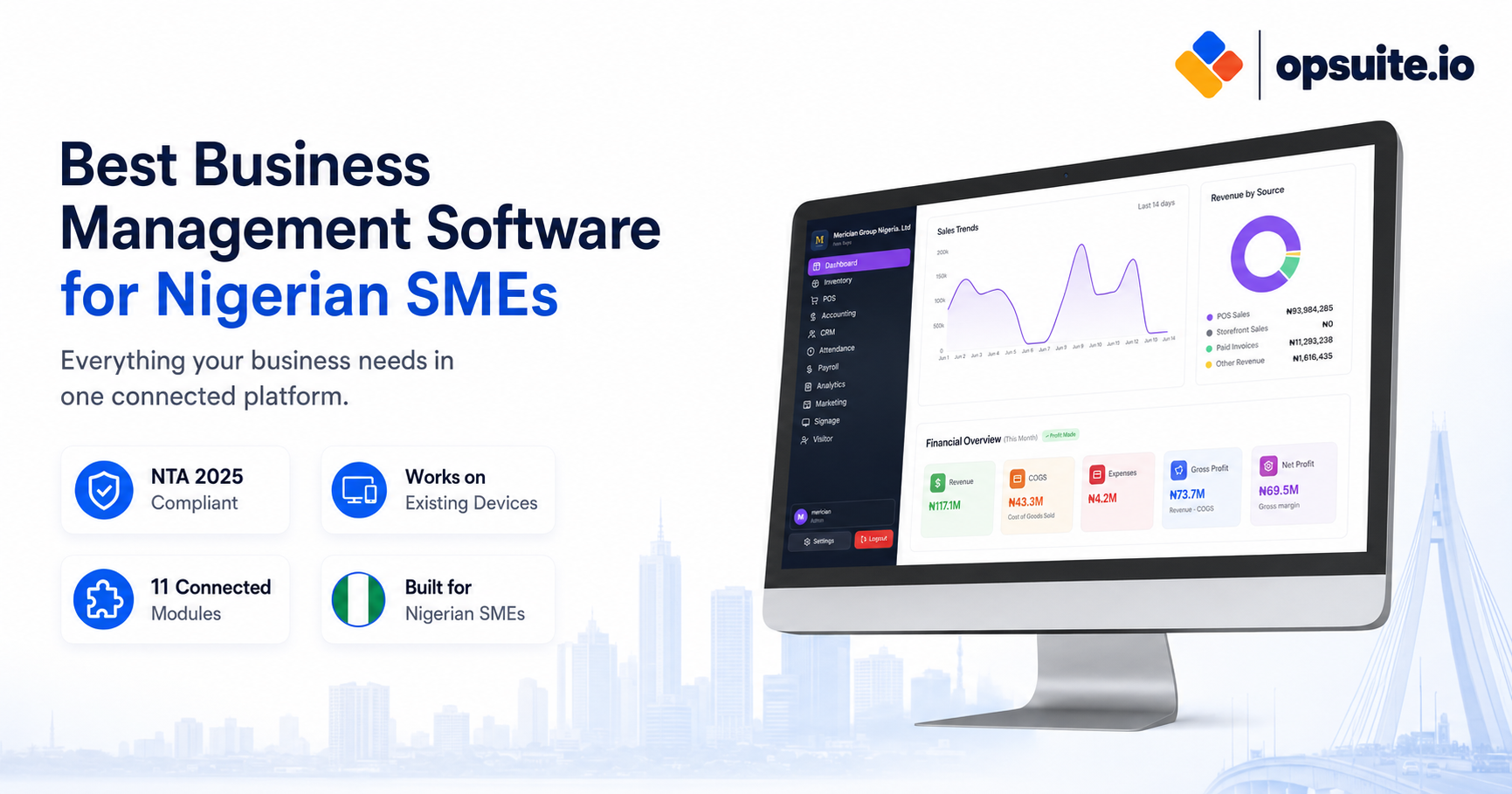
Opsuite's dashboard pulls live data from every module: today's sales, current stock levels, staff attendance, outstanding invoices, and expenses. Whether you are at your desk or checking from your phone, you get a complete picture of your business in real time. Multi-branch businesses can see data from all locations on a single screen.
The Bottom Line
Nigerian SMEs do not need more tools. They need fewer tools that do more. An integrated platform reduces errors, saves time, and gives you the data-driven clarity to grow with confidence. If your business is still juggling spreadsheets, separate POS systems, and manual processes, it is time to consolidate and move forward.