The Change Most Business Owners Missed
Nigeria's tax framework was significantly updated with the Nigeria Tax Act 2025. Most business owners in the country are still operating as if the old rules apply. Some are overpaying. Some are underreporting without knowing it. And many are missing out on a legitimate exemption that could save them a meaningful amount of money every year.
This is not a technical guide for accountants. It is a plain-language explanation of the four areas that affect most small and medium-sized businesses: company income tax, VAT, withholding tax, and PAYE.
Company Income Tax – The 0% You Probably Qualify For
Under the Nigeria Tax Act 2025, businesses with annual turnover below ₦50 million owe zero percent company income tax. Not a reduced rate. Zero.
This is one of the most significant reliefs available to small businesses in Nigeria, and the majority of the businesses it applies to either do not know it exists or cannot claim it because their records are not clean enough to prove their actual turnover.
The key word is turnover, not profit. If your total revenue for the year is below ₦50M, your company income tax liability is zero, regardless of how profitable you are. Businesses between ₦50M and ₦100M pay a lower rate. Businesses above ₦100M pay the full 30%.
Why Clean Books Are Not Optional
The exemption does not apply automatically. NRS expects you to be able to demonstrate your turnover figure with proper financial records. A business running on WhatsApp payments, unrecorded cash sales, and a rough spreadsheet does not have a defensible turnover figure. If your books are inconsistent, you cannot claim the exemption with confidence, and you certainly cannot defend it if questioned.
A business whose P&L is built automatically from every sale, invoice, and expense has a figure that holds up. That is what qualifies you to walk into the 0% threshold and stay there.
VAT at 7.5%
Value Added Tax remains at 7.5% on taxable goods and services. For businesses registered for VAT, this needs to be calculated correctly on each transaction, collected from customers, and remitted to NRS quarterly.
The risk for most small businesses is inconsistency. VAT applied on some invoices but not others. VAT calculated incorrectly because the rate was confused with a different figure. Quarterly returns filed with totals that do not match the transaction records.
The straightforward fix is to have VAT calculated automatically at point of sale. Every sale, every invoice, every line item adds the correct 7.5% where applicable. The VAT return figure is then simply a summary of what was already calculated correctly throughout the quarter.
Withholding Tax
Withholding tax is often the obligation that catches businesses off guard. When you pay for certain services, such as rent, consultancy fees, professional services, or certain contracts, you are required to deduct withholding tax at the applicable rate before paying the vendor and remit that deduction to NRS.
Most small business owners do not actively track which of their expenses attract withholding tax obligations. This creates a compliance gap that builds up over time. Good accounting software flags WHT obligations at the point of recording an expense, so nothing accumulates without your knowledge.
PAYE – Updated Brackets Under NTA 2025
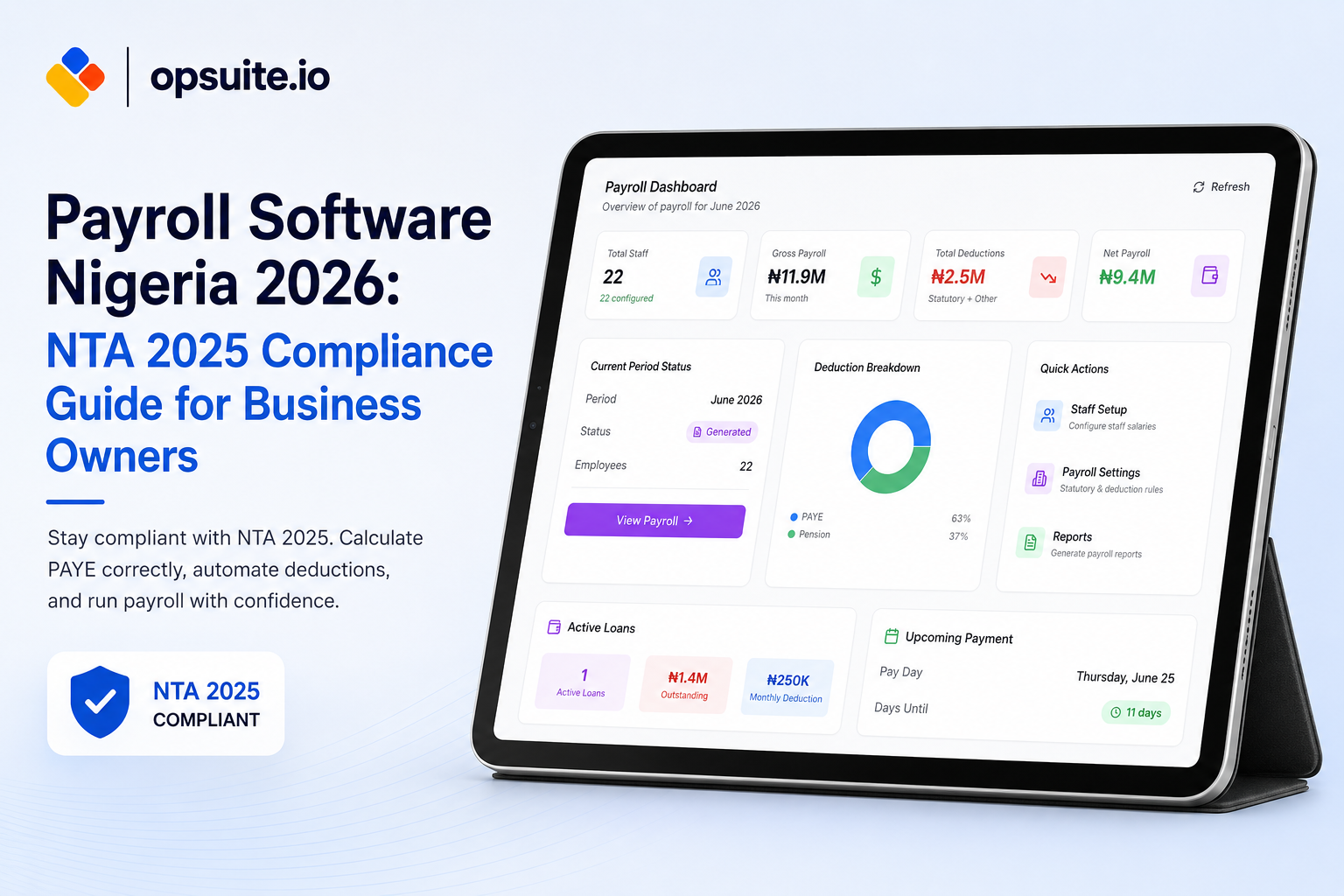
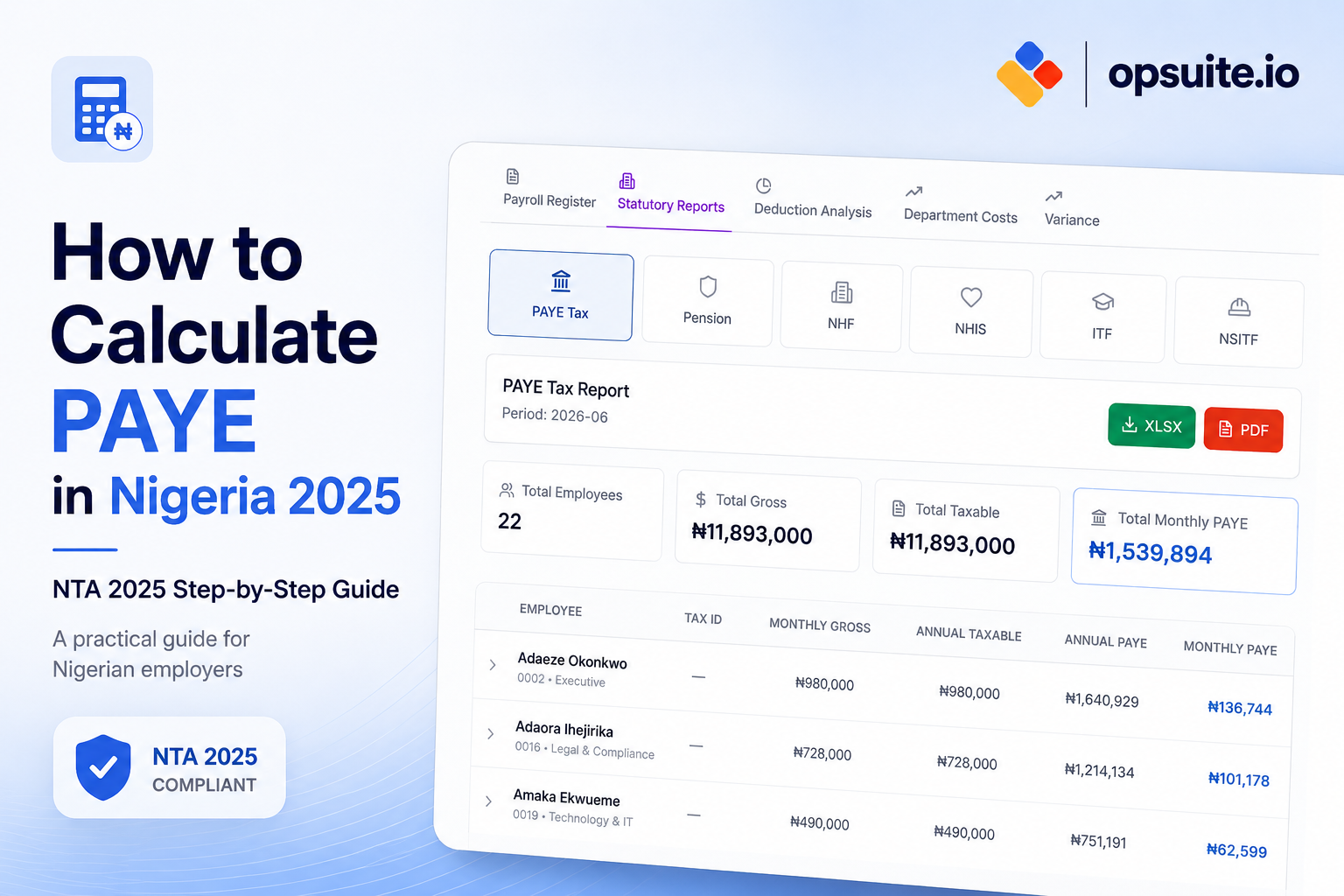
The Pay As You Earn brackets were revised under NTA 2025. If your payroll system is still using the old PITA brackets, your PAYE calculations are wrong. This affects both your employees, who may be over or underpaying tax, and your business, which is responsible for correct deduction and remittance.
The correct brackets need to be applied to each employee's annual gross pay after statutory deductions for pension, NHF, and NHIS. The resulting PAYE is then deducted monthly and remitted to NRS.
What This Means Practically
Tax compliance for a small Nigerian business in 2026 comes down to four things: knowing your real turnover, charging the right VAT, tracking WHT obligations as they arise, and running payroll on the correct PAYE brackets.
None of these require an accountant on retainer. They require accurate records and software that applies the right rules automatically. A business that keeps clean, real-time books is not just organised. It is protected.