What Changed With the Nigeria Tax Act 2025
The Nigeria Tax Act 2025 (NTA 2025) introduced the most significant changes to PAYE calculation in over a decade. New income brackets. Updated pension and NHF rules. A 0% Company Income Tax threshold for businesses earning under ₦50 million in annual turnover. And updated VAT registration thresholds.
Most Nigerian business owners do not know what changed. Most payroll software in use today has not been updated to reflect the new brackets. That means businesses are calculating PAYE incorrectly right now, either overtaxing employees or exposing themselves to FIRS penalties.
The NTA 2025 PAYE Brackets Explained
Under the new law, PAYE is calculated on annual gross income after relief deductions. The brackets are structured so that lower-income employees pay 0% up to ₦800,000 in annual income, with progressive rates rising to 25% above ₦32 million per year. Pension contributions, NHF, NHIS, and life assurance premiums are all treated as pre-tax deductions. They reduce gross income before PAYE is calculated, not after.
This ordering matters. A business that calculates PAYE before applying pension deductions is computing the wrong number. The correct sequence is: compute all statutory deductions first, then apply PAYE to the remaining gross.
What Good Payroll Software Nigeria Needs to Do
When evaluating payroll software for your Nigerian business, verify these five things:
1. Hardcoded NTA 2025 brackets. The PAYE brackets should be built into the software, not pulled from a database that might be stale. Ask the vendor when their brackets were last updated.
2. Correct deduction ordering. Pension, NHF, and NHIS must be subtracted from gross pay before PAYE is calculated. Software that applies PAYE to the full gross is computing incorrectly.
3. Per-staff configuration. Not every employee has the same reliefs. Rent allowance, life assurance, voluntary pension contributions differ per person. Good software lets you configure these per staff member and applies them automatically every pay cycle.
4. Automatic payslips. Each staff member should receive a payslip showing gross pay, every deduction line, and net pay. This is a legal requirement, not optional.
5. Attendance integration. If your payroll software is separate from your attendance system, someone is manually transferring hours every month. That is where errors enter. The two should be linked.
How Opsuite Payroll Handles NTA 2025
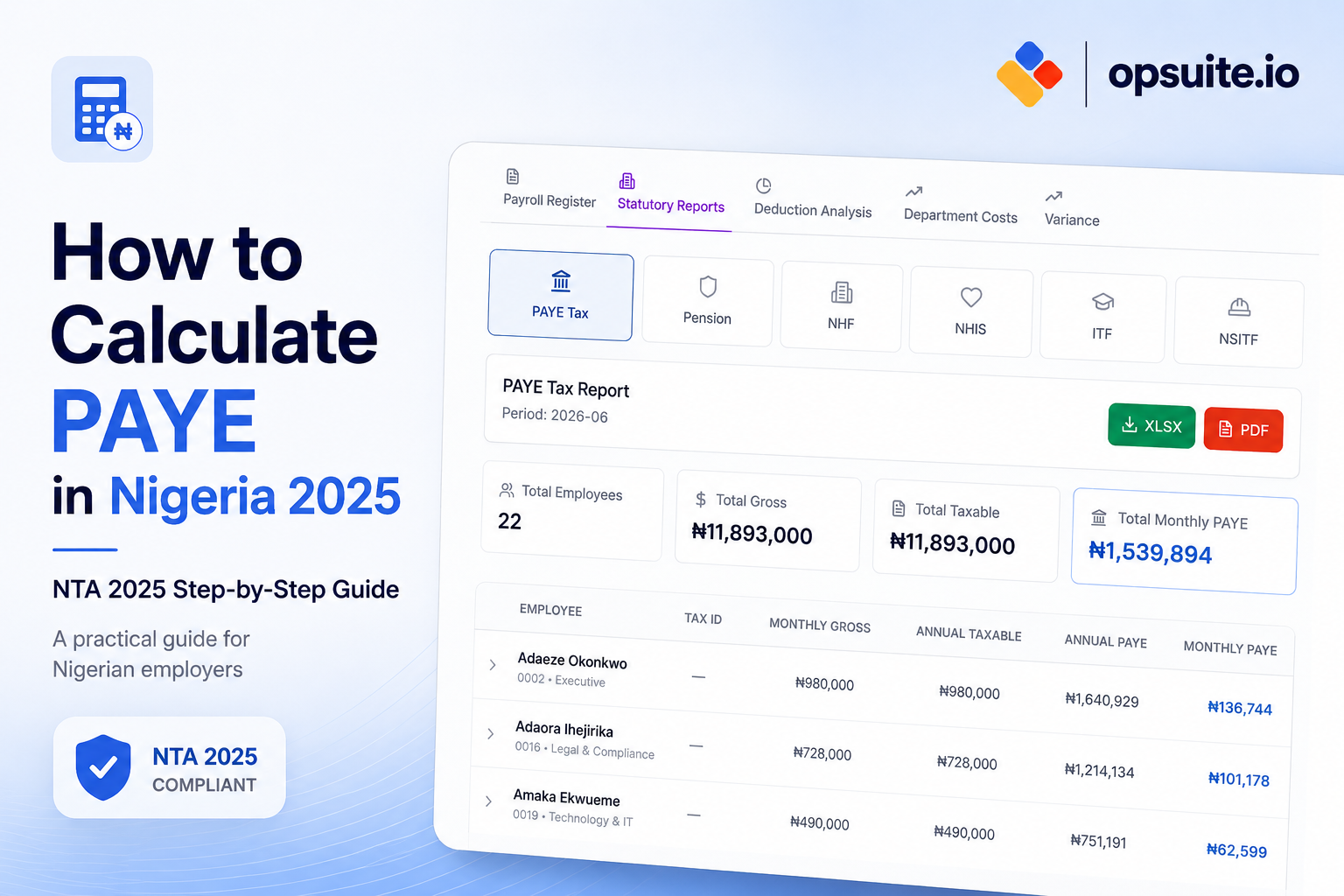
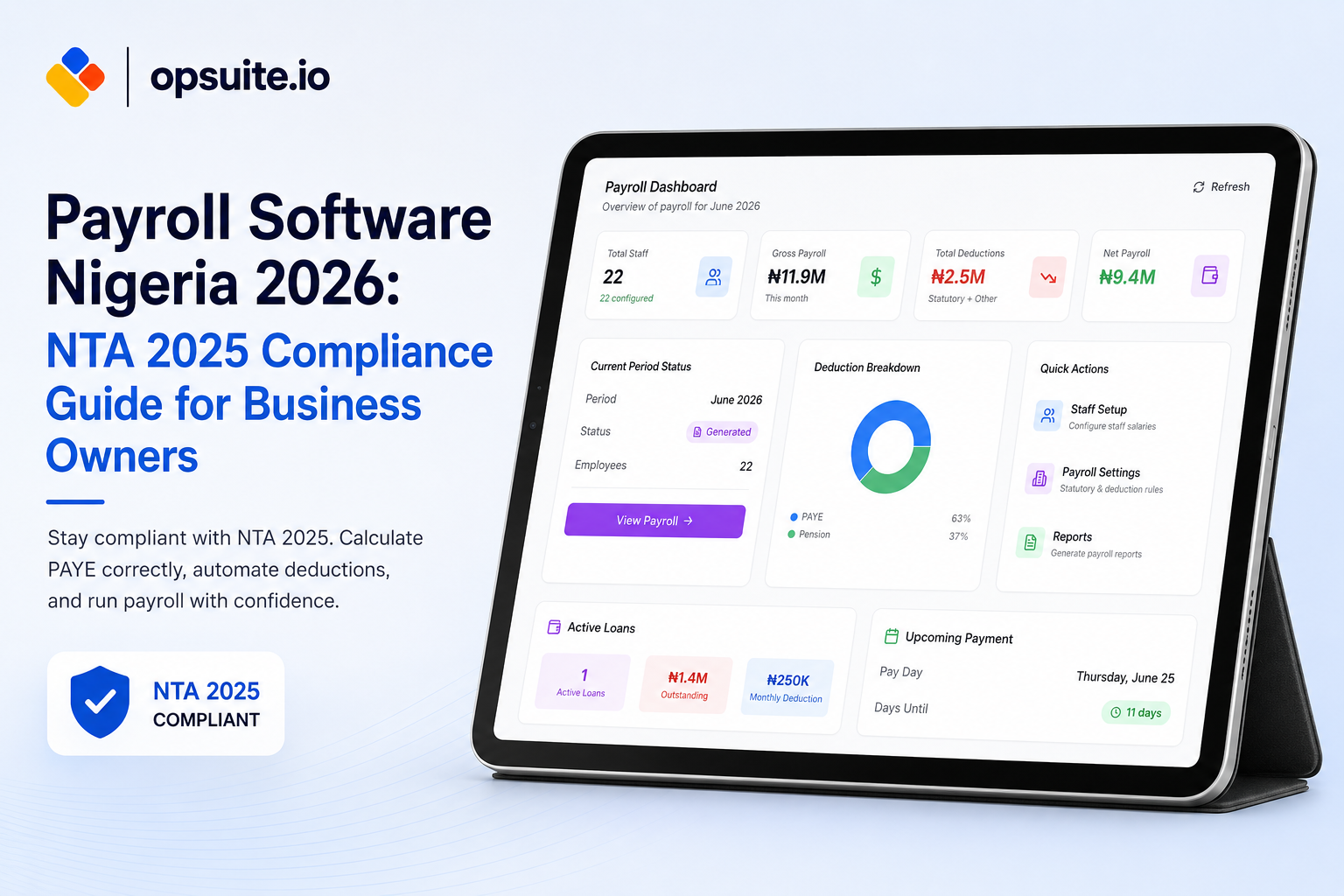
Opsuite Payroll was built to the NTA 2025 standard from day one. The PAYE brackets are hardcoded in the calculation engine, not stored in a database where they could become stale. Pension, NHF, and NHIS are computed first, before PAYE is applied. Rent relief is calculated at 20% of annual rent, capped at ₦500,000 per year.
Each staff member's profile holds their individual tax reliefs configured once and applied automatically every pay cycle. When payroll runs, every employee receives an itemised payslip. The owner sees a full summary before confirming — gross pay, total deductions, net pay, and employer contributions.
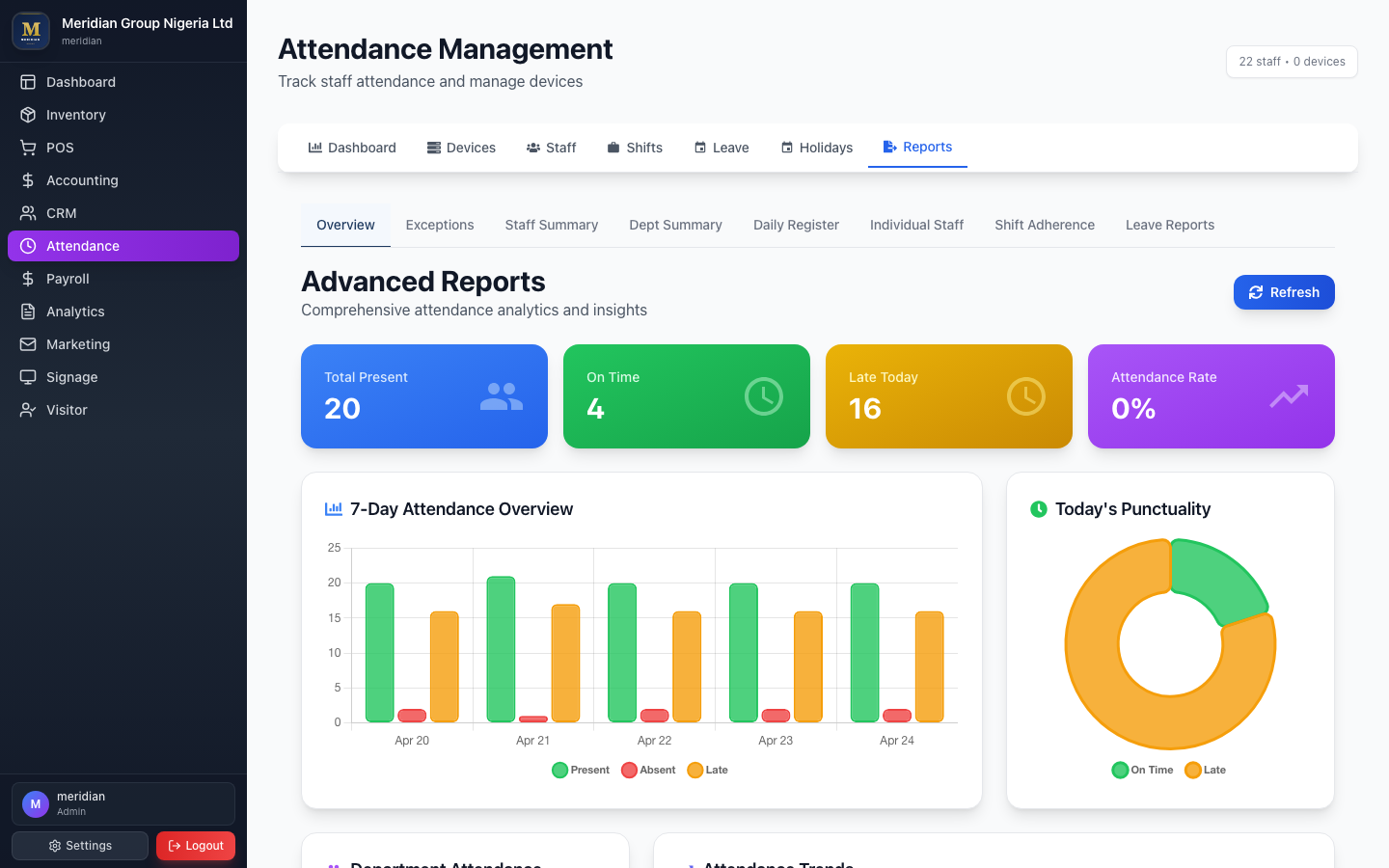
Because Opsuite Attendance and Payroll are built in the same platform, attendance data feeds directly into payroll. Clock-in records, shift hours, leave days — all applied without manual transfer.
Common Payroll Mistakes Nigerian Businesses Make
Running payroll on Excel is the most common source of errors. Formulas break when someone changes a cell. Brackets are not updated when the law changes. There is no audit trail. And when FIRS audits, there is nothing to show.
Using payroll software that predates NTA 2025 is equally risky. If the software still uses the old PITA brackets, every payslip since January 2025 is technically incorrect.
Start Running Compliant Payroll Today
Opsuite offers a free 7-day trial. All modules unlocked, no credit card required. Run a payroll simulation for your team before committing to anything — and see exactly how NTA 2025 calculations apply to your staff.
Start at opsuite.io/pricing or go directly to app.opsuite.io to begin your free trial.