What the Nigeria Tax Act 2025 Changed for Businesses
The Nigeria Tax Act 2025 is the most significant overhaul of Nigerian business tax in over a decade. It consolidated multiple tax laws, revised rates, introduced new thresholds, and changed the compliance calendar. The businesses that will benefit most are small businesses that understand what changed — because several of the changes work in their favour.
Most accounting software in use across Nigerian SMEs today was not updated for NTA 2025. That means the tax calculations in those systems are producing incorrect figures right now.
The Three Changes That Affect Your Books Most
1. Company Income Tax (CIT) — The 0% Threshold
Under NTA 2025, businesses with annual turnover below ₦25 million pay 0% Company Income Tax. Businesses between ₦25 million and ₦50 million pay a reduced rate. Only businesses above ₦50 million pay the full 30% CIT rate.
This is significant. Most Nigerian SMEs qualify for 0% CIT — but only if their books are accurate enough to support the turnover figure. An auditable Profit and Loss statement is the documentation that makes the 0% rate defensible in an FIRS review. A business running on spreadsheets or manual records is exposed, even if the underlying turnover genuinely qualifies.
2. VAT — Threshold and Rate
VAT registration is mandatory for businesses with annual turnover above ₦25 million. Below that threshold, VAT registration is optional. The rate remains 7.5%.
Accounting software needs to apply VAT at 7.5% automatically on qualifying transactions, track VAT collected and VAT paid separately, and generate a VAT schedule for the monthly filing due on the 21st of each month. Software that does not do this requires manual calculation — which is where errors enter.
3. PAYE — New Brackets and Deduction Order
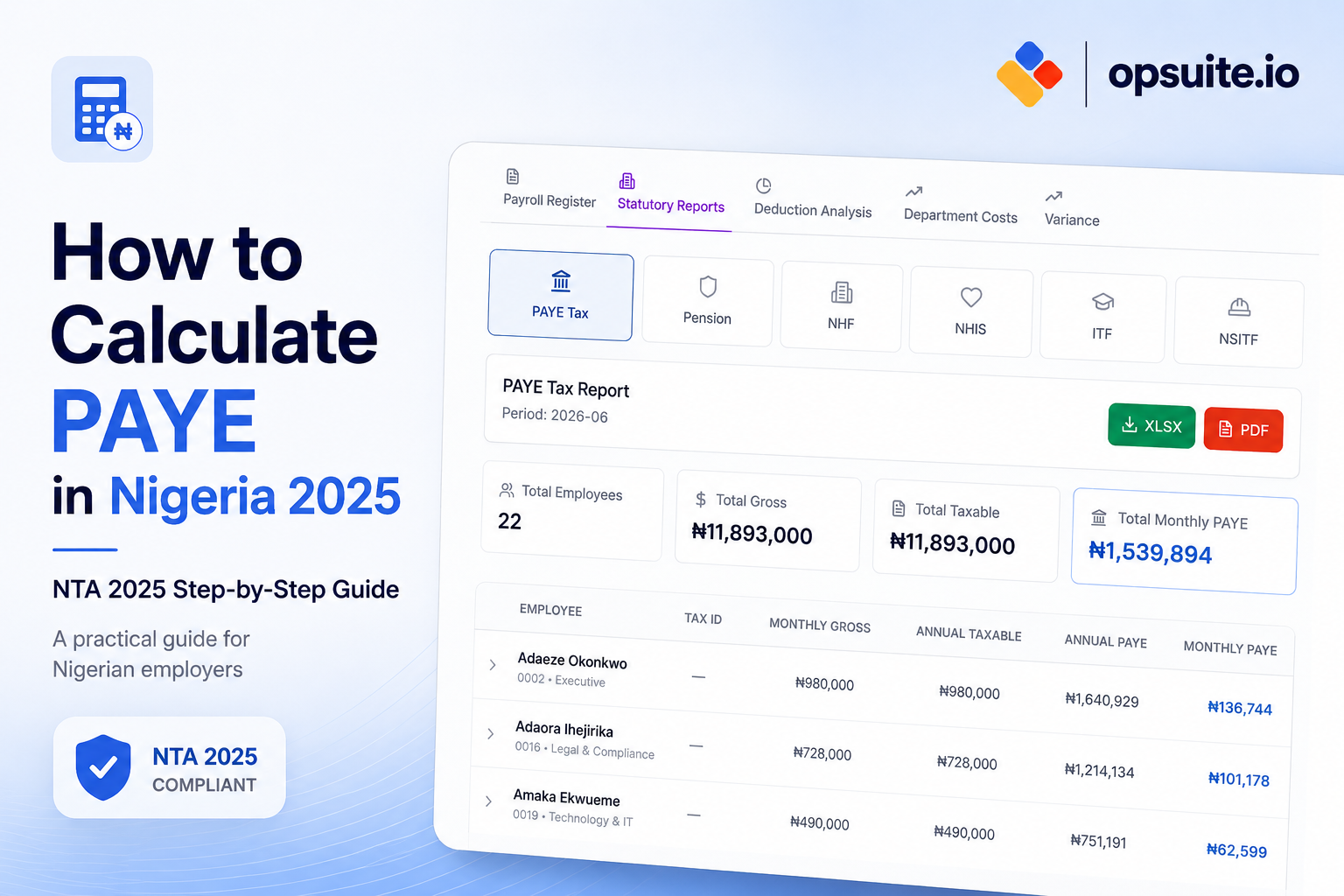
PAYE brackets changed under NTA 2025. The new structure is more progressive, with a 0% band up to ₦800,000 annual income and rates rising to 25% above ₦32 million. Pension, NHF, and NHIS must be deducted before PAYE is calculated — not after.
PAYE is a payroll function, but it flows into accounting. The monthly PAYE remittance (due on the 10th of the following month) is a liability that must appear in the books. Accounting software that does not pull PAYE data from payroll creates a gap in the financial picture.
What Good Accounting Software Nigeria Needs to Do Under NTA 2025
Auto-generate books from transactions. Every sale, invoice, and expense should flow into accounts automatically. No manual double entry. No end-of-month catch-up exercise.
VAT at 7.5% applied automatically. The system should calculate VAT on qualifying transactions, track the liability, and generate a VAT schedule on demand.
CIT calculation by turnover band. The system should apply 0% CIT for turnover under ₦25 million and flag when the business is approaching the threshold.
Tax deadline calendar. VAT due 21st of every month. PAYE due 10th of the following month. CIT due June 30th annually. These deadlines should be visible in the system — not remembered manually.
Exportable financial statements. P&L, balance sheet, and expense breakdown should be exportable as PDF or Excel for accountant review or FIRS submission.
PAYE integration from payroll. PAYE totals should flow from the payroll module into accounting automatically. The tax picture should be complete without manual entry.
How Opsuite Accounting Handles NTA 2025
Opsuite Accounting auto-generates books from every sale, invoice, and expense logged in the platform. VAT at 7.5% is applied automatically to qualifying transactions. CIT is displayed based on current turnover against the NTA 2025 thresholds. The Tax Compliance tab shows a plain-language breakdown of every rate and obligation.
The Tax Deadline Calendar shows VAT, PAYE, and CIT filing dates for the current and next quarter. PAYE totals from Opsuite Payroll flow into accounting automatically — the remittance liability is always current.
Financial statements — P&L, expenses, tax schedule — are exportable as PDF or Excel. The numbers are auditable because every transaction is logged with a timestamp, category, and source.
Getting Started
Opsuite Accounting is available on all plans with full NTA 2025 compliance built in. Start your free 7-day trial at opsuite.io/pricing or sign up at app.opsuite.io. No credit card required.